

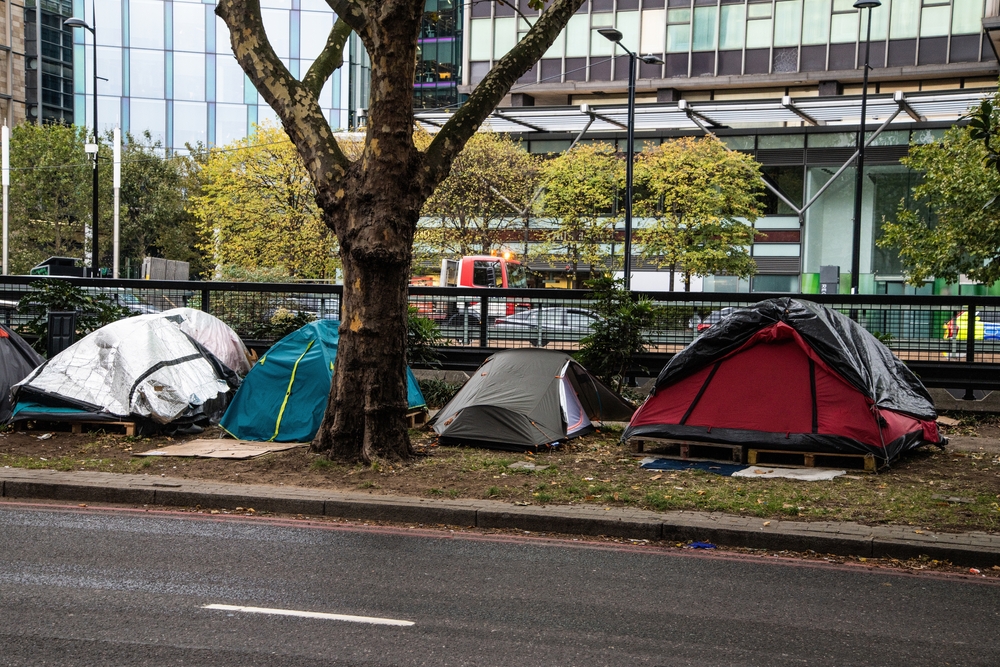
Abolishing the Act ends 200 year old legislation, which criminalised people for sleeping rough or begging…
The Government has repealed the Vagrancy Act, bringing an end to nearly two centuries of legislation that has criminalised rough sleeping and begging.
The Vagrancy Act was originally introduced in 1824 in response to rising homelessness following the Napoleonic Wars and Industrial Revolution. While its use has sharply declined, it is still sometimes used to move people on instead of addressing the root causes of a person’s homelessness.
Repealing the Act is at the heart of the Government’s National Plan to End Homelessness – backed by £3.6 billion over the next three years – which aims to halve long-term rough sleeping and end the unlawful use of B&Bs for families by the end of the Parliament.
The National Plan to End Homelessness includes:
- A £159 million grant for supported housing
- Setting clear targets for halving the number who become homeless on their first night out of prison and that no eligible person is discharged to the street after a hospital stay.
- It also sets a clear long-term ambition that no one should be made homeless from a public institution.
The upcoming Social Housing Bill aims to strengthen protections to victims of domestic abuse in social housing, helping to prevent homelessness – research shows that nearly 70% of women experiencing rough sleeping in 2025 had experienced domestic abuse since the age of 16.
There are already powers in place to tackle anti-social behaviour where it occurs, including under the Anti-Social Behaviour, Crime and Policing Act 2014. These are used where behaviour causes harassment or distress – not for simply being homeless. Statutory guidance will be updated to ensure these powers are used appropriately.
New offences in the Crime and Policing Act 2026 will target organised begging gangs, those who exploit others for financial gain, and trespass linked to criminal activity.
Chief executive of homelessness charity Crisis, Matt Downie, said: “This is a watershed moment which marks the end of a deeply cruel policy of criminalising people because they are homeless.
“For more than 200 years, the Vagrancy Act has punished people who have been forced to sleep on the streets. This has pushed people in already vulnerable situations away from support services and into the shadows for fear of being penalised.
“Now, after decades of charities campaigning alongside politicians, law enforcement and people with lived experience of homelessness, we can come together to celebrate the end of this archaic law.
“We commend the UK Government for standing up for what’s right and getting rid of a great injustice. We hope this sends a powerful message about the kind of society we want: one where people experiencing homelessness are not persecuted but supported to rebuild their lives and fulfil their potential.”
Caritas leads the way in Council Tax processing and recovery for social housing 🏘️💼📊
See how it works 👀 👉 https://yourrates.co.uk/social-housing